
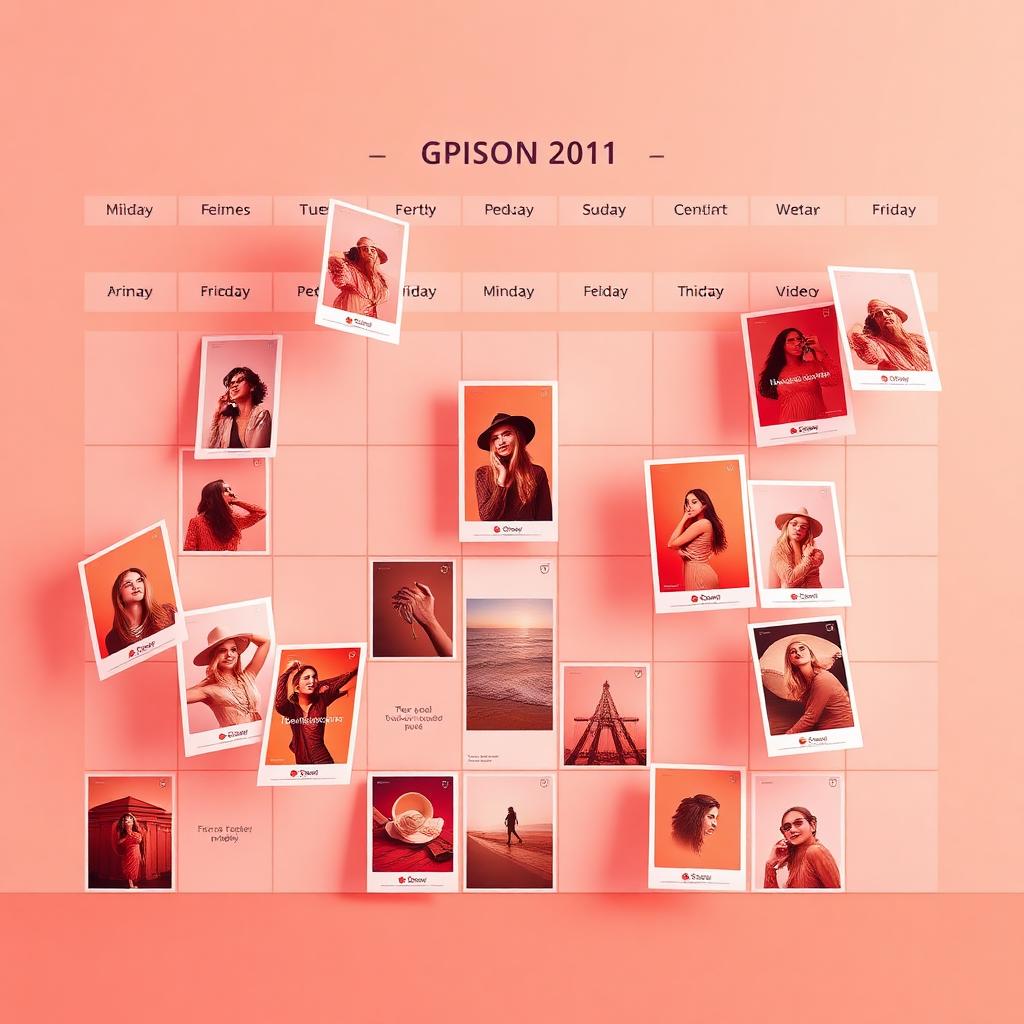
Inspiration doesn't scale. Systems do.
The single biggest reason brand social feeds go quiet: the team runs out of ideas. They start strong on a burst of enthusiasm, and by month three the calendar is a graveyard of empty slots.
The fix is not more creativity. It's fewer decisions. A content system pre-decides the format, the pillar, and the cadence, so weekly production becomes execution — not invention.
Every social team we've ever hired for from scratch has been more productive in month one — not month six. The reason is inevitably the same: they had a system on day one, and lost it as the calendar filled with campaign chaos. Reinstate the system. Productivity returns.
The five-pillar model
Pick five content pillars that map to your brand's promise. Educate, entertain, prove, humanise, sell. Assign each pillar to a fixed weekday. Assign each weekday a fixed format — Reel, carousel, static, story, live.
Now your calendar writes itself: Monday is 'Educate as a carousel,' Tuesday is 'Prove as a Reel,' and so on. Twenty slots a month, zero what-do-we-post debates.
The pillars aren't a strait-jacket. They're a scaffold. The creative team still owns the specific idea — but the format, the cadence and the tone are pre-decided. That's what turns a burnout job into a repeatable operation.
The 60-30-10 rule
Sixty percent of the calendar is systematised. Thirty percent responds to whatever is trending this week. Ten percent is experimental — new format, new voice, new angle. That mix keeps the feed both consistent and alive.
Skip the ten percent and the feed goes stale. Skip the sixty and the feed goes silent. The 30 is where the algorithm rewards you, but only if the 60 has bought you the trust to be seen at all.
How we validate this in real client work
At Rankzio, we treat every social recommendation as a hypothesis until the market proves it. Before a client commits budget, we review analytics, search behaviour, conversion paths, CRM notes, creative history and sales objections. That evidence tells us whether the problem is demand, trust, speed, message-market fit, distribution or measurement. The distinction matters. A brand with a tracking problem does not need more content yet; a brand with weak authority does not need another landing-page redesign first. The correct sequence is what protects budget and builds trust.
The senior review is practical rather than ceremonial. A strategist checks the business logic, a specialist checks the channel assumptions, and an editor checks whether the argument is clear enough for a busy founder to act on. If the idea cannot survive those three reviews, it does not become a client recommendation. This is the EEAT standard we use internally: experience from real campaigns, expertise from people who operate the channels, authority from documented evidence, and trust from explaining the trade-offs without hiding behind jargon.
What teams should do next
Start with a focused audit instead of a broad brainstorm. Pick one page, one funnel, one campaign, or one content cluster and ask three questions: what is the buyer trying to decide, what proof are we giving them, and where does the measurement become unreliable? Most growth problems become easier once those answers are visible. The next step is usually not a bigger plan; it is a cleaner signal. Clean signal lets you choose the next experiment with confidence.
Then build a 30-day operating rhythm. Assign one owner, define one success metric, document every change, and review progress weekly. The brands that win are rarely the ones with the most complicated dashboards. They are the ones that make fewer, better decisions and repeat them consistently. Whether you are applying this article to SEO, ads, content, social or automation, the principle is the same: make the work measurable, make the owner clear, and make the learning visible enough that the next decision gets easier.

Common mistakes to avoid
The first mistake is copying a tactic without copying the context that made it work. A competitor's content cadence, ad format, chatbot flow or website structure may look attractive, but their audience, price point, proof, brand awareness and sales cycle may be completely different. Borrow the principle, not the surface pattern. In our audits, the expensive failures usually come from teams imitating the visible output while ignoring the invisible operating system underneath it.
The second mistake is judging too early. Many worthwhile systems need enough impressions, crawls, conversations or conversions before the signal is useful. That does not mean waiting blindly. It means setting a fair test window, agreeing on leading indicators, and changing direction only when the evidence is strong. Good growth work is decisive, but it is not impulsive. The goal is to learn faster than competitors without letting noise masquerade as insight.
How many posts per month is enough?+
20 is our default for Instagram. Consistency of format matters more than volume; two thoughtful Reels a week beats seven forgettable posts.
Do I need to be on LinkedIn too?+
If you sell to businesses, yes. LinkedIn organic reach in 2026 is where Instagram was in 2018 — an unfair advantage for consistent posters.
Should I hire a creator or an agency?+
A creator for on-camera talent, an agency for the system. The best setups pair both — the agency handles pillars and calendar, the creator delivers the face and voice.
How long until I see results?+
Ninety days of consistent posting is the honest floor. Below that, you're rolling dice with the algorithm — and losing.
Turn the insight into a growth system.
Rankzio can audit your current setup and map the fastest path from this playbook to measurable revenue.
Book a strategy call